Visualizzazione post con etichetta persone meravigliose. Mostra tutti i post

Soul Kitchen: un ristorante senza prezzo! - Soul Kitchen: a priceless restaurant!

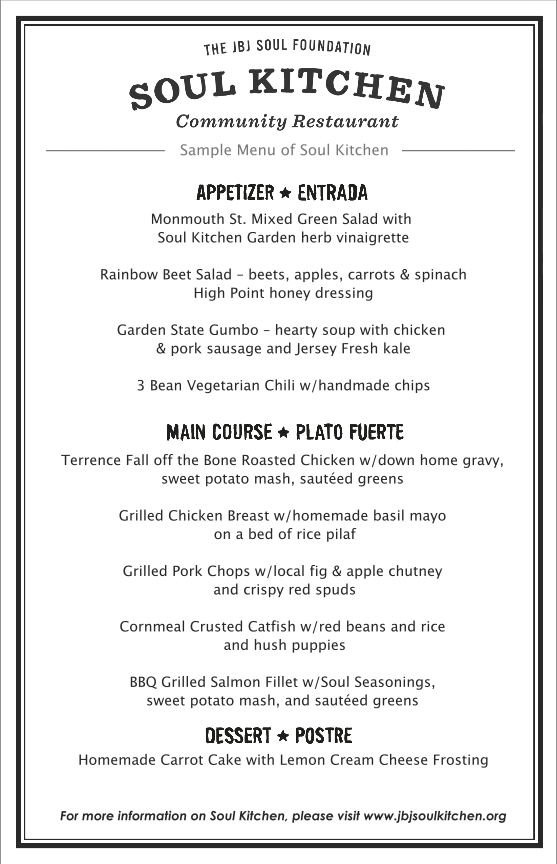
Jon Bon Jovi a Red Bank, nel New Jersey, ha aperto il Soul Kitchen, un ristorante "di comunità" in cui i piatti non sono prezzati: ognuno paga quello che può (c'è una donazione minima di 10 $) oppure può fare un'ora di volontariato in cambio di un pasto. A tavola ci si siede dove capita, anche accanto a un perfetto sconosciuto. Al Soul Kitchen può mangiare chi si può permettere di pagare la donazione minima, chi può pagare di più (offrendo quindi il pasto a un'altra persona) o chi non può pagare, e in questo caso basta un'ora del proprio tempo. Le persone che hanno bisogno mangiano insieme a quelle che desiderano contribuire alla comunità e tutti quanti stanno in compagnia: il fatto di sedersi accanto a persone che non si conoscono e condividere il pasto con loro fa parte della filosofia del locale. Tutti vengono trattati con gentilezza, rispetto e gioia: il motto del ristorante è "Tutti sono benvenuti alla nostra tavola". Naturalmente chi vuole fare volontariato solo per il piacere di farlo è il benvenuto, e può prestare la propria opera come cameriere, lavapiatti o magazziniere. Il ristorante è sempre disponibile a chi desidera prestare la propria opera per la comunità!
I pasti sono costituiti da tre portate: il primo è una zuppa o un'insalata, il secondo pesce, carne o un piatto vegetariano e infine c'è il dolce. Tutti i cibi sono preparati con ingredienti freschi, locali e spesso biologici (il ristorante ha il proprio orto).  Non è necessaria la prenotazione (chi prima arriva meglio alloggia!)

Jon Bon Jovi in Red Bank, New Jersey, has opened the Soul Kitchen community restaurant, where  food is priceless: everyone pays what they can (there is a $ 10 minimum donation for people who can afford to pay) or you can volunteer for an hour for a meal. You will be seated, even next to a complete stranger. At Soul Kitchen are welcome those who can afford to pay the minimum donation, those who can pay more (thus providing a meal to another person) or who can not pay, and in this case, they can give an hour of their time. People who are in need eat close to those who wish to contribute to the community and everybody enjoys the company: the fact that people who do not know each other sit together and share a meal is part of the of the restaurant's philosophy. All are treated with kindness, respect and cheefrulness: the motto of the restaurant is "All are welcome at our table." Of course, those who want to volunteer just to hel the community are welcome, and they can offer their services as waiters, washing dishes or warehousemen. The restaurant is always available to those who want to offer their services to the community!
The meals consist of three courses: the first is a soup or salad, the second fish, meat or a vegetarian dish and finally there is a fresh baked cake. All meals are prepared with fresh, local and often organic (the restaurant has its own garden) ingredients. You do not need a reservation (first come first served!)

Due chiacchiere con...Fabrizio Macchi - Chitchatting with...Fabrizio Macchi

Di Fabrizio ho accennato brevemente qui. Avevo letto di lui e delle sue imprese sportive su Vanity Fair e l'articolo a lui dedicato è stato la prima fonte d'ispirazione per questo blog. Vanity è un bel giornale, e parla spesso di persone straordinarie, anche se poi tra un servizio di moda su vestiti costosissimi e una pagina di gossip le cose più belle un po' si perdono...poi mi è venuta un'idea: ma perchè non aprire un blog dove si parla SOLO di persone straordinarie e cose belle? E voilà, eccoci qua. Insomma, Fabrizio mi aveva colpita molto e ho pensato: provo a scrivergli, magari mi risponde! Ebbene, non solo ha risposto all'email, ma ci ho parlato pure al telefono! Ed ecco il riassunto della nostra breve chiacchierata.

Fabrizio, dove si trova la forza per ottenere grandi risultati pur partendo da una situazione svantaggiata?
Per quello che mi riguarda, io l'ho trovata nella famiglia: i miei genitori prima e mia moglie e i bimbi poi. I sogni si possono realizzare, l'unico limite non è fisico, ma è nella testa.

Cosa suggeriresti alle persone disabili che dovendo partire da zero devono scegliere uno sport? Di provarne diversi e poi scegliere?
Va bene l'idea di provarne diversi, ma comunque partire da quello che piace di più e che ti è permesso dalla tua disabilità.

Secondo te vale la pena mettersi alla prova anche se si rischia di non riuscire?
Sì, certamente. Non tutti nascono campioni, ma uno se non ci prova non lo può sapere! Bisogna perseguire un obiettivo anche se non si ha uno specifico talento, basta la voglia di fare.

Qual è la conseguenza psicologica peggiore di un fallimento, nello sport? Sei d'accordo con l'idea di sostituire la parola "fallimento" con "feedback"?
Sì: il cosiddetto fallimento in realtà è un punto di partenza. Alcuni tipi di sconfitta in realtà possono essere una cosa positiva ed essere usati costruttivamente per andare sempre più avanti.

Parliamo un po' del caso Armstrong: non è stata una sconfitta per tutti l'annullamento delle sue vittorie? Che effetto può fare una vicenda del genere su chi crede ancora nello sport?
Questa è una domanda davvero difficile, e rispondere è molto complicato. Quello che è certo è che bisogna essere onesti prima di tutto con se stessi, e andare avanti unicamente con le proprie forze: è questo che cerco di insegnare ai miei figli. Però non si può sapere perchè certe persone prendono determinate strade; probabilmente è che a volte si entra in un particolare meccanismo, in un sistema che ci si accorge essere sbagliato, ma non ci si tira comunque indietro. E' come in certe relazioni: si dà tutto per farle funzionare anche se si capisce che non vanno bene, ma si va avanti pur di non ammettere di essersi sbagliati...e poi magari alla fine ci si separa lo stesso! Il punto è che quando si è all'interno di un determinato meccanismo poi diventa praticamente impossibile tornare indietro. E' fondamentale in questo caso essere circondati da persone, amici, che ti fanno notare i tuoi sbagli, anche se alla fine resti comunque tu a decidere. Però a volte anche le persone che hai intorno non sono quelle che vorresti!

Insomma, cari tutti, vincenti si può nascere, certo. Ma anche diventare, con un certo impegno!
Ringrazio Fabrizio della disponibilità!


I briefly mentioned Fabrizio’s story here. I had read about him and his sport achievements on the Italian edition of Vanity Fair; and the article about him was my first source of inspiration for this blog. Vanity is a great magazine, often talking about extraordinary people, even though sometimes these amazing stories get lost among fashion shoots of expensive clothes and gossip pages... Then I got an idea: what about a blog where we talk ONLY about great people and beautiful things? And voila, here we are. In short, Fabrizio had inspired me and I thought: I’ll try to email him, maybe he’ll reply! Well, he replied to my email, and I've also talked to him on the phone! And here is the summary of our brief chat.

Fabrizio, where can you find the strength to get great results, in spite of starting from a disadvantage?
As far as I'm concerned, I found it in my family: my parents first and then my wife and children. Dreams can come true, the only limit is not physical, but it's in our mind.

What would you suggest to people with disabilities who want to choose a sport and have to start from scratch? Should they try different sports before choosing ?
It is a good idea to try several sports, but always start from what you like best and is allowed by your disability.

Do you think it is worth to prove yourself in a sport even if you may fail?
Yes, of course. Not everybody is born as a champion, but if one does not try, he’ll never know! You must pursue an objective, even if you do not have a specific talent, just the desire to do it.

What is the worst psychological consequence of a failure in sport? Do you agree with the idea of ​​replacing the word "failure" with "feedback"?
Yes, the so-called failure is actually a starting point. Some types of failure can actually be a good thing and should be used constructively to go ever further.

Let's talk about  Lance Armstrong case: wasn’t everybody’s defeat the cancellation of all his victories? What effect can a story like that can have on those who still believe in sport?
This is a very difficult question, and answering is very complicated. What is certain is that we must first of all be honest with ourselves, and go on on our own, with our very own strenght: this is what I try to teach my children. But you may never know why certain people take a path insetad of another; probably is because sometimes you get into a strange mechanism, a system that you know is wrong, but you don’t back off anyway. It 's like in certain relationships: you do everything to make them work even if you understand that it’s not going to work, but you’d rather go on instead of realizing you are wrong ... and then maybe eventually you split off anyway! The point is that when you are within a certain mechanism then it becomes virtually impossible to go back. It’s essential in this case to be surrounded by people, I’m talking about friends, that point out to you your mistakes, even if eventually it’s up to you. But sometimes even the people around you are not what you want!

So maybe people are born winners. But you can also become it, with some effort!

Thanks to Fabrizio for his courtesy!

Vincenti - Winners

Alex Zanardi


Figlio di un idraulico e di una casalinga, una sorella maggiore morta a 16 anni, era pilota di Formula 1. Il 15 settembre 2001 a Lausitz, in Germania a causa di un terribile incidente Zanardi perse immediatamente entrambe le gambe e in pochi minuti quasi tre quarti di tutto il suo sangue. Dopo alcuni giorni tra la vita e la morte si riprese, e dopo la riabilitazione tornò in pista con la Gran Turismo, grazie a un'auto modificata. Corse altri 5 anni, poi nel 2007 passò alla handibike, arrivando quarto alla maratona di New York, che poi ha vinto nel 2011. Alle paralimpiadi di Londra di quest'anno, 2012, ha vinto due ori. Ha detto: "Quando hai una vera passione, non puoi parlare di sacrifici".

Son of a plumber and a housewife, an older sister died at 16, he was a Formula 1 driver. On September 15th, 2001 in Lausitz,Germany  a terrible accident caused him the loss of both legs and -in a few minutes- of almost three quarters of his blood. After a few days between life and death he recovered, and after rehab he went back to Gran Turismo races  with a modified car. He raced for 5 more years, then in 2007 he switched to handibike, finishing fourth in New York marathon, which he won in 2011.  This year, 2012, he won two gold medals at the London Paralympics. He said: "When you have passion, you can not talk about sacrifice."

Fabrizio Macchi


All’età di 13 anni, a Fabrizio venne diagnosticato un osteosarcoma al ginocchio sinistro, una delle forme tumorali più aggressive. Dopo 3 anni di dolorose terapie la gamba gli venne amputata, su sua espressa richiesta. Ha vinto tre maratone di New York, ha conquistato molti titoli nel canotaggio, in Italia ha vinto 3 volte sia il campionato di salto in alto che il campionato di salto in lungo.
Prima di approdare al ciclismo aveva vinto 12 medaglie; nel nuovo sport ha raggiunto il bronzo alle paralimpiadi di Atene con la specialità inseguimento su pista. E' sposato con due bambini. 
Ha detto: "In genere la mattina appena apro gli occhi provo un senso di piacevole stupore. Quello è il momento più bello. C’è una giornata da vivere e io ci sono."

At the age of 13, Fabrizio was diagnosed with osteosarcoma in his left knee, one of the most aggressive forms of cancer. After three years of painful treatments his leg was amputated, at his express request. He has won three New York marathons and many other titles as well. In Italy he won 3 times both the high jump championship and the  long jump championship.
Prior to switching to cycling he had won 12 medals; in his new sport he has reached the bronze medal at the
Athens Paralympics in  2008, with the track pursuit race. He's married with two children.
He said: "Usually in the morning when I open my eyes I feel a sense of pleasant surprise. That is the most beautiful moment. There is a day to live and I'm here."


Stephen Hawking 


"Ho avuto una malattia neuro-motoria praticamente per tutta la mia vita adulta. Eppure questo non mi ha impedito di avere una splendida famiglia e successo nel mio lavoro. Questo grazie all'aiuto che ho ricevuto da Jane, dai miei figli, e da un gran numero di altre persone e organizzazioni. Sono stato fortunato del fatto che la mia condizione è progredita più lentamente di quanto succeda di solito. Ma questo dimostra che non bisogna  perdere la speranza."
 
"I have had  motor neurone disease for practically all my adult life. Yet  it has not  prevented me from having a very attractive family, and being  successful in my  work. This is thanks to the help I have received from Jane, my children, and a  large number of other people and organisations. I have been  lucky, that my  condition has progressed more slowly than is often the case. But it shows that  one need not lose hope."  

                                      
Morris Goodman

            
Conosciuto come l'Uomo del Miracolo: dopo un terribile incidente aereo gli avevano detto che se fosse sopravvissuto sarebbe rimasto totalmente paralizzato, invece cammina con le sue gambe e gira il mondo tenendo seminari.

AKA The Miracle Man: he had been told that had he survived after his accident he'd be doomed to a short painful life in a persistent paralyzed state; now he walks on his own and travels all over the world holding workshops

 Abigail e Brittany Hensel


Secondo i medici non sarebbero vissute più di qualche giorno: hanno 22 anni, si sono laureate e hanno girato l'Europa con gli amici

Doctors told their mom that they would not have lived more than a few days: now they are 22, have graduated and  travelled all over Europe with friends

Temple Grandin

                                                         
Gravemente autistica nell'infanzia, non ha parlato fino ai 4 anni di età, e se sua madre avesse dato retta ai medici l'avrebbe chiusa in una casa di cura per il resto della sua vita. Inizialmente non in grado di gestire le proprie emozioni e le relazioni con gli altri, si rese conto da giovanissima di avere una grande affinità con gli animali, in particolar modo i bovini. Dopo aver completato tutti gli studi, ha proseguito con una serie di specializzazioni che l'hanno portata a diventare docente di scienze animali all'Università del Colorado e a progettare la metà degli stabilimenti di allevamenti di bestiame degli Stati Uniti, con la finalità di alleviare lo stress degli animali. In più è una grande studiosa dell'autismo, ha scritto molti libri al riguardo e partecipa a molti seminari e conferenze per spiegare ai neurotipici come si vive da autistici.
Ha detto, a un giornalista che la intervistava:  «Senza l’autismo non avremmo forse avuto Albert Einstein o Wolfgang Amadeus Mozart. Chi pensa che abbia inventato il registratore che sta usando? Probabilmente un signore affetto da una forma più o meno lieve di autismo che invece di perdere tempo ha passato ore a cercare di risolvere il problema della riproduzione del suono».

Severely autistic during her childhood, she has not spoken up to 4 years of age, and if her mother had listened to the doctors, she would have locked her in a nursing home for the rest of her life. Initially unable to manage her emotions and relationships with others, she realized as a young girl that she had a great affinity with animals, particularly cattle. After finishing school, she went on with university studies which allowed her to become a professor of animal science at the University of Colorado and to design half of the livestock establishments of the United States, with the aim of relieving animal stress. She's also a great scholar of autism, and has written many books about it and participated in many seminars and conferences to explain to neurotypical people how's life with autism.
She told a reporter who interviewed her: "Without autism maybe we would not have had Albert Einstein and Wolfgang Amadeus Mozart. Who do you think invented invented the tape recorder you are using? Probably a man who suffered from mild autism who, instead of wasting time, spent hours trying to solve the problem of sound reproduction.
"
 

...in aggiornamento
...updating


Il sogno di un bambino - A kid's dream

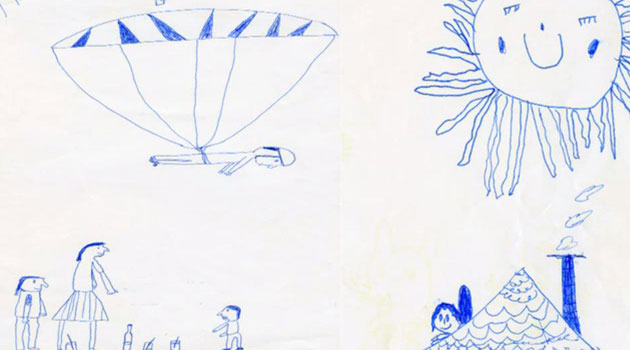
Questo disegno l'ha fatto un bambino di 5 anni: ritrae se stesso che si paracaduta da una grande altezza mentre da terra la sua famiglia lo guarda. Quel bambino si chiamava Felix Baumgartner, e forse vi ricordate di lui per aver fatto questo:


This drawing was made by a 5 year old kid, who has portrayed himself as he parachutes from a great height, while from the ground his family looks at him. That child's name was Felix Baumgartner, and maybe you remember him for doing this:
 
Mai sottovalutare i sogni di un bambino! :-)

Never  underestimate a kid's dream! :-)

Belle persone - Nice people


Dopo l'uragano Sandy, molte zone sono rimaste senza elettricità. Alcune persone hanno messo a disposizione le proprie prese per permettere agli altri di ricaricare i loro dispositivi portatili

After Hurricane Sandy, many areas have been left out of electric power. Some people have offered their sockets to allow others to recharge their portable devices

Quando non ci si fa fermare da un cromosoma in più - When a spare chromosome doesn't stop you

Sul numero 43 di Vanity Fair c'è un bellissimo servizio che racconta di come otto ragazzi down abbiano partecipato, insieme a un team di esperti velisti, alla regata "Barcolana" di Trieste su un 27 metri, Le Poste, arrivando ventiquattresimi su 1.735 barche, di cui hanno tagliato il traguardo in 122. I ragazzi si sono allenati con il team di Mascalzone Latino e hanno stupito per la costanza e l'impegno che hanno messo nei compiti loro assegnati, dal timone al grinder alle scotte...I frutti di questo lavoro saranno narrati nel documentario "La forza del vento". I ragazzi si chiamano Benedetta Skofic detta Sko, Benedetta 2, Nicola, Gennaro, Giordana, Chiara, Francesco e Giovanni e hanno dai 23 ai 38 anni. Nella vita fanno varie cose: chi va a scuola, chi fa il cuoco, chi lavora in una fattoria, insomma si danno da fare. Sentite cosa dice Giovanni: "La mattina faccio la doccia, la barba, mi lavo i denti e ascolto la musica. Poi vado a scuola. E' vero, siamo down, ma non ce ne frega niente. e anche se ci dicono monoloidi, siamo felici lo stesso perchè le cose più importanti sono la serenità, la gioia e stare insieme".
Ora, in barba a tutti gli stupidi pietismi di chi dice "poverini che disgrazie" e i preconcetti di chi pensa che solo i nurotipici abbiano diritto a un posto nel mondo, secondo me questi ragazzi hanno moltissimo da insegnare a chi tende a lamentarsi sempre delle inigiustizie del mondo, pur avendo salute, famiglia e lavoro.
Nella foto, tratta dal sito  http://www.mascalzonelatino.it, Sko al timone.


On Vanity Fair N° 43 (Italian edition) there is a wonderful article about the story of eight persons with Down Syndrome who, along with a team of experienced sailors, raced at "Barcolana" regatta in Trieste, Italy,  with a 27 meter sailboat, Le Poste, finishing 24th out of 1,735: just 122 boats crossed the finish line. These young people have been training with Mascalzone Latino sailing team and amazed everybody because of their perseverance and commitment to their tasks: operating the helm or the grinder or the sails... Their story will be narrated in the documentary "The strength of the wind. " Their names are: Benedetta Skofic aka Sko, Benedetta 2, Nicola, Gennaro, Giordana, Chiara, Francesco and Giovanni and they are from 23 to 38. They do different things in their lives: some go to school, one is a chef, another works in a farm... in short, they are busy. Listen to what Giovanni says: "In the morning I take a shower, shave, brush my teeth and listen to music. Then I go to school. It's true, we are Down, but we do not give a damn. They call us mongoloid, but we are happy anyway, because the most important things are serenity, joy and togetherness."

Now, in spite of all the stupid pieties of those who say "poor things, what a misfortune" and preconceptions of those who think that only neurotypical people are entitled to a place in the world, I think these guys have a lot to teach to those who keep
complaining about how unfair is the world, despite their health, family and work.

The picture, from  http://www.mascalzonelatino.it, shows Sko at the helm.
 

Post più vecchi Home page

Total Pageviews

Sponsor

Ads

Popular Posts

Social Icons

Featured Posts

Cosa facciamo qui?

Questo blog ha come scopo il pensiero positivo, suscitato da tutto ciò che è bello: persone (ovviamente non nel senso fisico, o meglio non solo), cose, case, posti, sogni, disegni...

This blog aims positive thinking, inspired by all that is beautiful: people (obviously not in the physical sense, or rather, not just in this way), things, houses, places, dreams, drawings...


Followers


Recent Comments